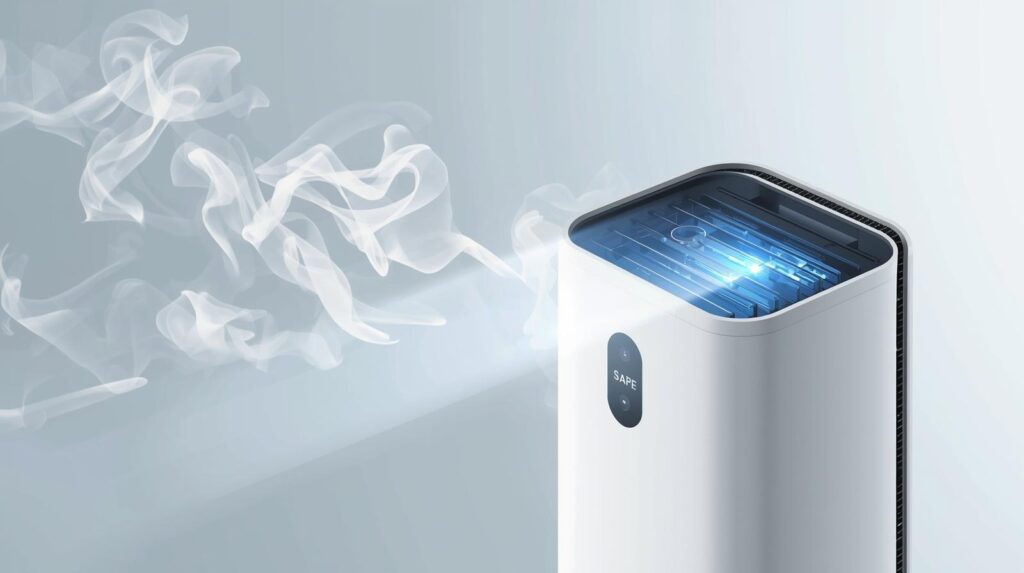
Airborne smoke particles present a significant challenge to indoor air quality. Whether originating from seasonal wildfires, neighboring wood stoves, or localized pollution, smoke contains microscopic particulate matter (PM2.5) that can trigger asthma, exacerbate allergies, and compromise cardiovascular health.
According to guidelines from the U.S. Environmental Protection Agency (EPA), maintaining a designated clean room equipped with a high-efficiency particulate air (HEPA) filter is a primary defense against these pollutants. Air purifiers engineered specifically for smoke removal utilize a combination of mechanical filtration and activated carbon to capture harmful particulates and neutralize volatile organic compounds (VOCs).
This 2026 buyer’s guide evaluates the most effective air purification systems available for smoke mitigation. We analyze specific metrics including Clean Air Delivery Rate (CADR) for smoke, True HEPA filter efficiency, activated carbon capacity, and smart home integration. By comparing these data points, consumers can identify the precise equipment required to maintain an allergen-free environment for their families.
The Health Risks of Smoke Particles and HEPA Filtration
Smoke is a complex mixture of gases and fine particles produced when wood and other organic materials burn. The primary health threat comes from fine particles, known as PM2.5, which are 2.5 microns or smaller in diameter. These microscopic pollutants can penetrate deep into the lungs and enter the bloodstream, causing systemic inflammation.
To effectively remove PM2.5 from indoor environments, an air purifier must employ a certified True HEPA or H13 HEPA filter. These filters undergo rigorous testing to ensure they capture at least 99.97% of airborne particles as small as 0.3 microns.
However, HEPA filters alone do not eliminate the harmful gases and odors associated with smoke. Effective smoke mitigation requires a secondary filtration stage utilizing activated carbon. Carbon filters adsorb gaseous pollutants, including formaldehyde, benzene, and smoke odors, safely removing them from the air circulation.
5 Best Air Purifiers for Smoke Removal in 2026
We evaluate units based on their certified CADR ratings, filter specifications, room size capacities, and user satisfaction metrics. The following models demonstrate superior performance in mitigating smoke and airborne allergens.
1. Klarta Forste Smart Air Purifier
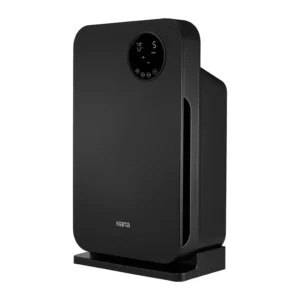
The Klarta Forste stands out as a highly efficient, data-driven solution for extensive indoor spaces
- Room Capacity: Ideal for rooms up to 1,237 ft²
- Filtration System: Advanced H13 HEPA filter combined with an activated carbon filter and a standard pre-filter.
- Performance Metrics: This unit delivers a CADR for PM2.5 up to 300 m³/h on its highest setting. The H13 filter guarantees 99.97% effectiveness against particles down to 0.3 microns, while the dedicated carbon layer neutralizes cigarette and wildfire smoke odors.
- Smart Features: It includes three distinct IQ Sensors (PM2.5, temperature, and humidity) and operates via Wi-Fi with mobile app integration.
- Noise and Efficiency: It operates quietly, emitting as little as 20 dB in night mode, and consumes only 5 watts of power on its lowest setting.
2. Blueair Blue Pure 211i Max
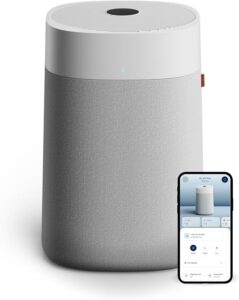
The Blueair Blue Pure 211i Max is engineered for rapid air exchange and high-volume filtration.
- Smoke CADR: 435 cfm
- Room Capacity: Recommended for 674 sq. ft. based on updated Department of Energy (DOE) standards, achieving 4.8 air changes per hour (ACH).
- Filtration System: Utilizes HEPASilent™ technology, which combines electrostatic and mechanical filtration to remove 99.97% of airborne particles. Users can upgrade to the SmokeBlock filter, which contains dual-action activated carbon specifically formulated to remove up to 99.9% of wildfire smoke.
- Maintenance Tracking: Features a proprietary RealTrack algorithm that calculates remaining filter lifetime based on fan speed, usage time, and real-time pollution levels.
3. Coway Airmega 400S
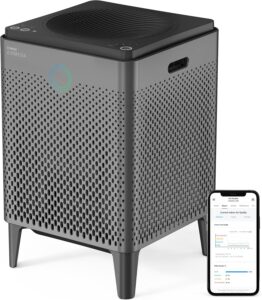
Designed for maximum coverage and heavy-duty particulate removal, the Coway Airmega 400S provides robust protection for large living areas.
- Smoke CADR: 328 cfm
- Room Capacity: Filters air in spaces up to 1,560 sq. ft. with two air changes per hour.
- Filtration System: Features a dual-sided Max2 Filter Set, combining a washable pre-filter with a thick layer of granular activated carbon and a True HEPA filter.
- Smart Integration: Includes mobile app controls, real-time air quality monitoring, and automated fan speed adjustments based on ambient particle concentration.
4. Levoit Core 600S
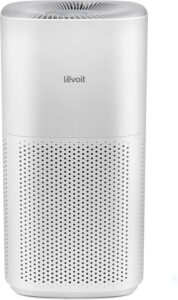
The Levoit Core 600S offers high-speed purification and extensive smart home compatibility for modern households.
- Smoke CADR: 410 cfm
- Room Capacity: Effectively filters rooms up to 1,588 sq. ft. in 30 minutes.
- Filtration System: Uses a 3-stage filtration process including a custom high-efficiency activated carbon filter formulated with ARC Formula. This specific carbon blend chemically decomposes molecules trapped within the filter, preventing second-hand pollution and lingering smoke smells.
- Smart Features: Fully compatible with Amazon Alexa and Google Assistant, allowing users to monitor air quality and adjust settings using voice commands or the VeSync app.
5. Winix 5500-2
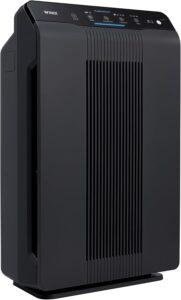
Winix 5500-2 remains a reliable, cost-effective standard for odor management and baseline smoke removal.
- Smoke CADR: 232 cfm
- Room Capacity: AHAM verified for 360 sq. ft.
- Filtration System: Features a washable Advanced Odor Control (AOC) carbon filter comprised of genuine carbon granules, followed by a True HEPA filter.
- Technology: Utilizes PlasmaWave technology to neutralize airborne viruses and gases at a molecular level, providing an additional layer of protection without emitting harmful levels of ozone.
2026 Buyer’s Guide: Evaluating Smoke Air Purifiers
Selecting the appropriate equipment requires an objective analysis of several technical specifications.
Understanding CADR Ratings
The Association of Home Appliance Manufacturers (AHAM) developed the Clean Air Delivery Rate to measure an air cleaner’s efficacy. CADR indicates the volume of filtered air an air cleaner delivers, measured in cubic feet per minute (cfm). Units receive separate scores for tobacco smoke, pollen, and dust.
When sizing a purifier for standard conditions, the smoke CADR should equal at least two-thirds of the room’s square footage. For example, a 120-square-foot room requires a minimum smoke CADR of 80. However, during severe wildfire smoke events, AHAM recommends a 1:1 ratio, meaning the Smoke CADR should equal the total square footage of the room.
Activated Carbon Filtration
HEPA filters do not capture gases. Therefore, the activated carbon filter is the primary mechanism for removing VOCs and the distinct smell of smoke. We prioritize units that utilize granular activated carbon rather than carbon-impregnated fiber sheets. Granular carbon provides a significantly larger surface area for adsorption, resulting in faster and more thorough odor neutralization.
Smart Home Integration and Sensors
Real-time data allows purifiers to respond to environmental changes automatically. Units equipped with laser-based PM2.5 sensors detect microscopic smoke particles immediately, automatically increasing fan speeds to clear the room before pollutants settle. Smart integration via mobile applications enables users to monitor indoor air quality remotely, track historical pollution data, and receive precise filter replacement alerts based on actual usage rather than estimated timelines.
Read Also: Top 5 Air Purifiers for Large Rooms
Maintenance Protocols for Smoke Odor Removal
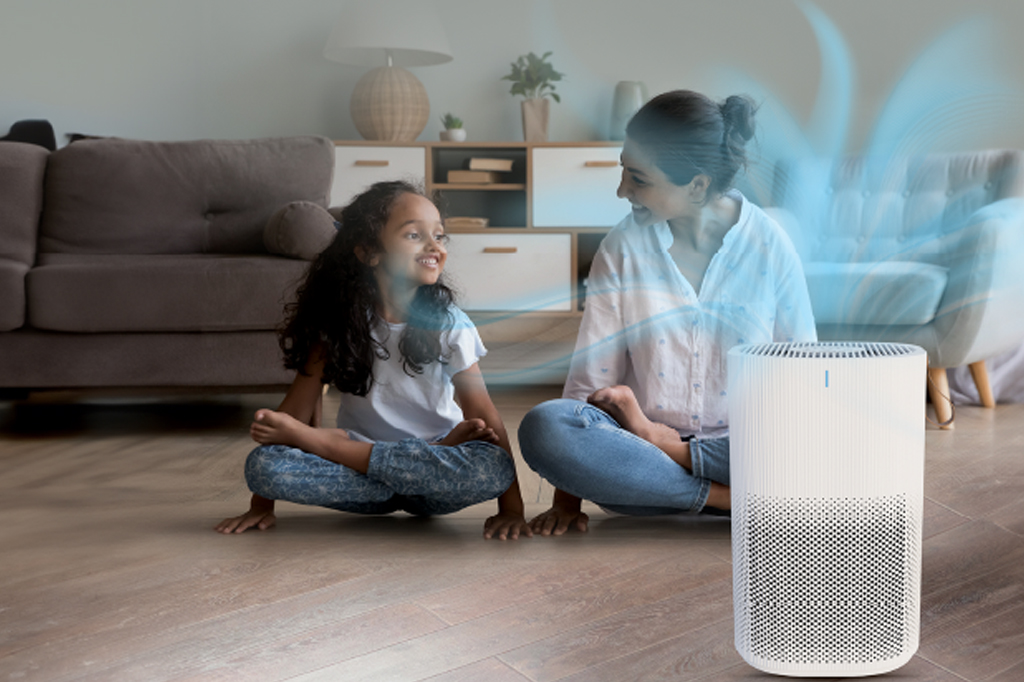
Consistent maintenance dictates the long-term effectiveness of any air purification system. A saturated filter will restrict airflow, reduce CADR, and potentially release captured odors back into the environment.
Filter Replacement Intervals
Standard True HEPA and activated carbon filters possess a service life of approximately 6 to 12 months under normal conditions. During periods of heavy smoke or active wildfire seasons, the particulate load increases exponentially. EPA guidance advises replacing filters more frequently than manufacturer recommendations during these events. If the filter appears heavily soiled or if smoke odors persist while the unit is operating, immediate replacement is necessary.
Pre-Filter Cleaning
The pre-filter acts as the first line of defense, capturing large dust particles and pet dander before they reach the critical HEPA and carbon layers. Vacuuming or washing the pre-filter every two to four weeks ensures optimal airflow. Restricted airflow forces the motor to work harder, increasing energy consumption and reducing the overall clean air delivery rate.
Final Verdict: Selecting the Best Air Purifier for Your Home
Investing in a certified air purifier provides measurable improvements to indoor air quality, directly benefiting respiratory health and overall household comfort.
For consumers seeking an optimal balance of price, smart capabilities, and expansive room coverage, the Klarta Forste stands as the superior choice. Its ability to manage spaces up to 1,237 ft² while providing whisper-quiet operation and precise PM2.5 tracking makes it highly effective for families. Conversely, individuals requiring rapid air exchange in heavily polluted, high-volume environments may find the robust CADR metrics of the Blueair Blue Pure 211i Max or the Coway Airmega 400S better aligned with their specific air quality requirements.
By prioritizing certified smoke CADR ratings and consistent filter maintenance, households can maintain a clean, allergen-free environment regardless of exterior pollution levels.