Managing indoor air quality remains a critical health priority for families and allergy sufferers in 2026. Environmental factors such as seasonal pollen spikes, renovation dust, and increased urban pollution levels consistently trigger respiratory issues and asthma symptoms. For health-conscious households, relying on standard HVAC filters is rarely sufficient to maintain a comfortable, allergen-free environment.
A dedicated air purifier equipped with advanced filtration technology provides a measurable reduction in airborne particulate matter, directly contributing to decreased household illnesses and fewer allergy flare-ups. Upgrading your home’s air filtration system requires navigating a complex market of technical specifications, from Clean Air Delivery Rates (CADR) to specific High-Efficiency Particulate Air (HEPA) classifications.
This comprehensive guide analyzes the top-performing air purifiers available this year. We evaluate units based on their filtration efficiency, smart home integration, noise output, and long-term maintenance costs. By understanding these key metrics, you can make an informed decision that ensures whisper-quiet operation, easy maintenance, and noticeably fresher air for your family.
Comprehensive Review: Klarta Forste Smart Air Purifier
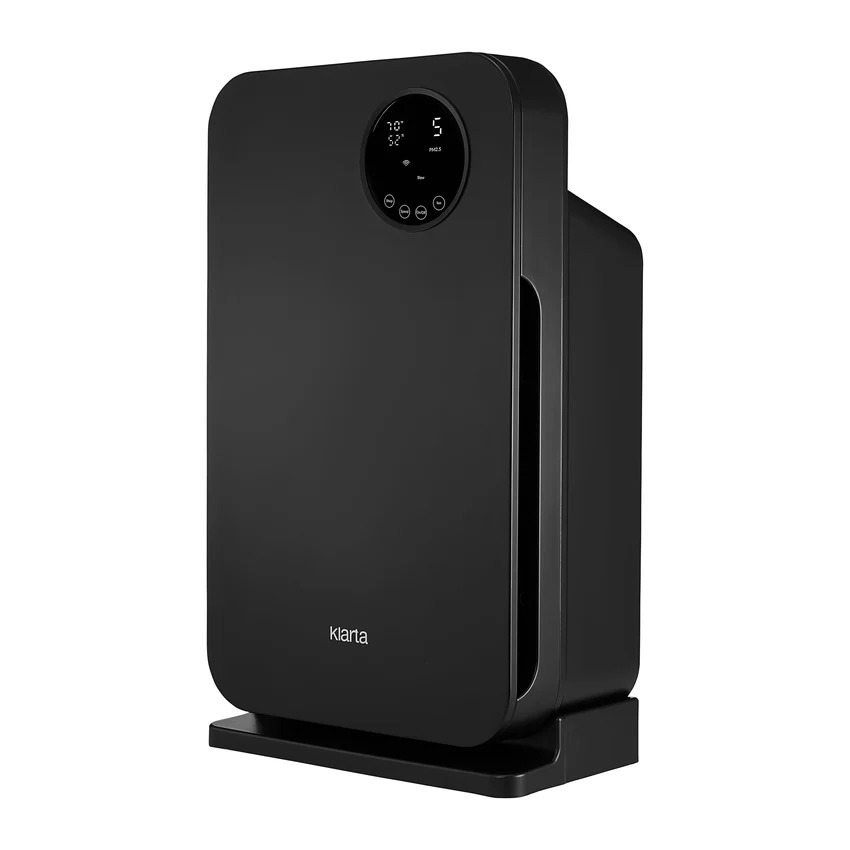
Our top recommendation for 2026 is the Klarta Forste, an advanced air purification system engineered for high efficiency and seamless smart integration. Designed to handle large living spaces, this unit combines premium filtration materials with intuitive digital controls.
Maximum Coverage Area: Up to 1,237 ft²
Check out the overall Best Air Purifiers in 2026
Filtration Technology and Sensors
The Klarta Forste utilizes a rigorous three-stage filtration process capable of capturing 99.97% of particles down to 0.3 microns.
- Pre-Filter: Captures large particles like pet hair and prominent dust, protecting the lifespan of the interior filters.
- Activated Carbon Filter: Uses highly porous activated carbon to absorb volatile organic compounds (VOCs), dangerous gases, and household odors.
- H13 HEPA Filter: This high-capacity filter traps microscopic irritants, including PM10, PM2.5, PM1 dust, plant allergens, pet dander, and mold spores.
The device features an integrated PM2.5 laser sensor that continuously monitors ambient air quality. It works alongside temperature and humidity sensors to provide a complete picture of your indoor climate. When set to Auto Mode, the system automatically adjusts its fan speed based on real-time PM2.5 readings, ensuring efficient operation without manual intervention.
Operation and Smart Features
For health-conscious families needing quiet operation, the Klarta Forste excels. It operates at a noise level starting as low as 20 dB in night mode, ensuring it will not disturb sleep. Even when functioning in Auto Sleep mode, the noise output caps at a highly manageable 36 dB.
The energy consumption is remarkably low, drawing just 5 watts in its lowest setting and 9 watts in Auto Sleep mode. Users can control the device remotely using the Smart Life application, which allows for scheduling, air quality monitoring, and setting adjustments directly from a mobile device.
Top-Rated Air Purifiers of 2026
While the Klarta Forste stands out for its high coverage-to-price ratio, several other models perform exceptionally well based on AHAM (Association of Home Appliance Manufacturers) standards and high CADR metrics.
Blueair Blue Pure 211i Max
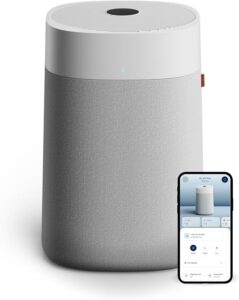
Designed specifically for large allergy-prone rooms, the Blue Pure 211i Max provides substantial air movement and efficient particle removal.
- Coverage Area: 635 sq. ft. (based on 4.8 Air Changes per Hour)
- CADR: Smoke: 435 CFM, Dust: 452 CFM, Pollen: 450 CFM
- Noise Level: 23 dB to 53 dB
- Filtration: Utilizes proprietary HEPASilent™ technology, which combines mechanical and electrostatic filtration to capture particles down to 0.1 microns.
Coway Airmega AP-1512HH Mighty
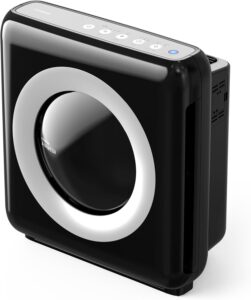
A reliable staple for medium-sized living areas, this unit balances performance with an accessible price point.
- Coverage Area: 361 sq. ft. (based on 4.8 Air Changes per Hour)
- CADR: Smoke: 234 CFM, Dust: 248 CFM, Pollen: 232 CFM
- Noise Level: 24 dB to 53 dB
- Filtration: Features a true HEPA filter and a vital ionizer function to effectively reduce airborne particulates.
Levoit Core 300
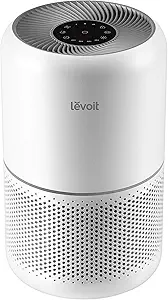
An entry-level option ideal for individual bedrooms or small office spaces, providing verified performance without a heavy footprint.
- Coverage Area: 222 sq. ft. (based on 4.8 Air Changes per Hour)
- CADR: Smoke: 143 CFM, Dust: 153 CFM, Pollen: 167 CFM
- Noise Level: 24 dB to 54.5 dB
- Filtration: Uses a standard HEPA filter capable of capturing standard allergens.
Read Also: Top Air Purifiers for Smoke
In-Depth Buyer’s Guide: Filtration and Specifications
Selecting the right air purifier requires understanding specific industry standards. We prioritize units that provide clear, verifiable data regarding their filtration capabilities.
Understanding HEPA H13 and H14 Classifications
According to the rigorous EN 1822 testing standard, HEPA filters are categorized by their efficiency at capturing the Most Penetrating Particle Size (MPPS), which typically ranges between 0.1 and 0.2 microns.
- H13 HEPA Filters: These filters remove a minimum of 99.95% of airborne particles. They are the industry standard for high-quality residential air purifiers and effectively manage severe allergy symptoms.
- H14 HEPA Filters: Engineered for clinical, cleanroom, and operating theater environments, H14 filters remove a minimum of 99.995% of particles. This provides ten times lower particle penetration than an H13 filter. While highly effective, H14 filters require more powerful fans to push air through the denser filter media, which can increase energy consumption and noise levels in residential units.
The Role of Activated Carbon Filters
While HEPA filters excel at trapping solid particulate matter, they cannot capture gases. Activated carbon filters handle this workload through a process called adsorption. The high porosity of activated carbon gives it a massive surface area to absorb volatile organic compounds (VOCs) like benzene and formaldehyde, as well as smoke, cooking odors, and pet smells. For optimal performance against chemical irritants, select units that specify the inclusion of a dedicated granular carbon filter rather than a simple carbon-coated sponge.
Smart Sensors and Real-Time Adjustments
Modern air purifiers feature built-in laser sensors that detect PM2.5 (particulate matter 2.5 microns or smaller). These sensors feed data directly to the unit’s Auto Mode, allowing the fan speed to scale up during periods of high pollution—such as when cooking or vacuuming—and scale down to conserve energy when the air is clean.
Comparison: Coverage Areas, Maintenance Costs, and Noise Levels
To accurately compare air purifiers, consumers must evaluate the relationship between room coverage, the cost of upkeep, and the acoustic impact on the living space.
Read also: Top 5 Air Purifiers for Large Rooms
Coverage Areas and Air Changes per Hour (ACH)
Manufacturers calculate coverage areas using different Air Changes per Hour (ACH) metrics. The AHAM standard recommends 4.8 ACH, meaning the machine filters the entire volume of the room almost five times every hour.
- A unit like the Klarta Forste advertises up to 1,237 ft² based on 1 ACH, making it highly effective for maintaining baseline air quality in large, open-concept homes over longer periods.
- For acute allergy relief in a targeted zone, dividing that maximum square footage to achieve 4 to 5 ACH provides a robust defense against rapid pollen influxes.
Maintenance Costs and Filter Replacement
The initial purchase price is only part of an air purifier’s total cost. Filter replacements dictate the long-term return on investment.
- Klarta Forste: Requires a replacement filter set (Carbon and H13 HEPA) approximately every 12 months. The genuine replacement set costs $48.00 USD, making it highly economical for long-term household use.
- Blueair 211i Max: Filters require replacement every 6 to 12 months depending on usage, with replacement costs generally ranging between $60.00 and $80.00 USD.
- Levoit Core 300: Requires replacements every 6 to 8 months, with filters costing approximately $30.00 USD.
Noise Levels for Nighttime Operation
A purifier cannot provide health benefits if it is too loud to run continuously. We evaluate noise levels strictly by decibels (dB). Units operating below 30 dB are generally considered whisper-quiet and suitable for bedrooms. The Klarta Forste (20 dB at lowest setting) and the Coway Airmega (24 dB at lowest setting) provide excellent sleep-friendly environments without disrupting rest.
Maintenance Tips for Peak Performance and Allergen Reduction
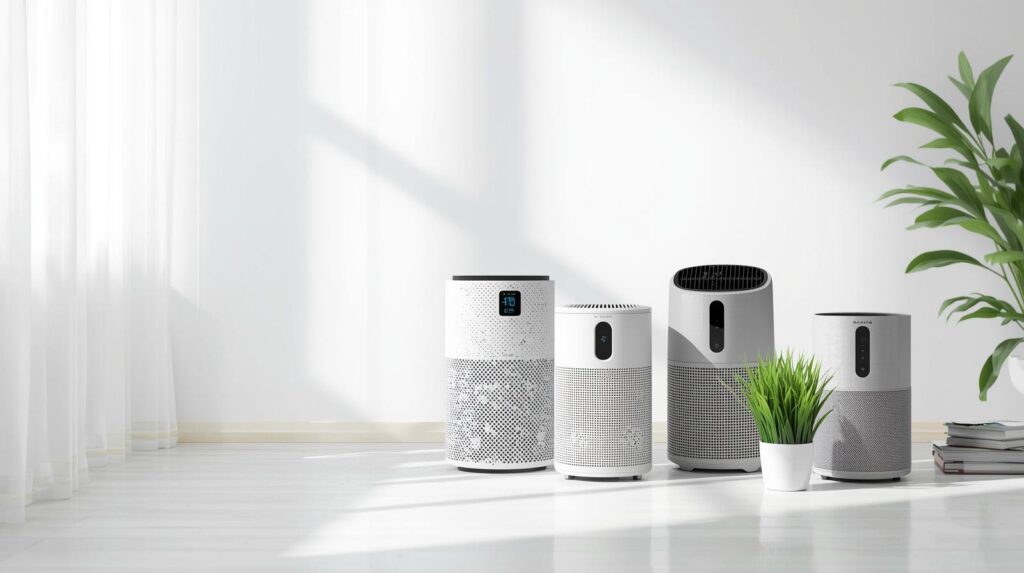
Maintaining your air purifier ensures the device meets its CADR specifications and prevents collected allergens from re-entering the environment.
- Follow Filter Replacement Schedules: Operating a unit with a saturated HEPA or carbon filter severely restricts airflow and stresses the motor. Utilize smart app notifications or built-in filter indicator lights to swap filters exactly when recommended (typically every 6 to 12 months).
- Vacuum Pre-Filters Regularly: Most units feature a washable or vacuumable pre-filter. Cleaning this outer layer every two to four weeks prevents pet dander and thick dust from clogging the primary HEPA filter, extending the life of your replacement parts.
- Optimize Device Placement: Position the air purifier at least 18 inches away from walls and furniture to ensure unobstructed 360-degree airflow. Never block the intake or exhaust vents.
- Run Continuously on Auto Mode: Airborne allergens settle and resuspend continuously. Running the device 24/7 on an energy-efficient Auto Mode guarantees that unexpected pollutant spikes are neutralized immediately.
Frequently Asked Questions
Do air purifiers actually help with pet allergies?
Yes. Units equipped with H13 HEPA filters capture the microscopic proteins found in pet dander, saliva, and urine that trigger allergic reactions. Paired with a carbon filter to neutralize pet odors, these devices significantly improve air quality in multi-pet households.
How is CADR measured and verified?
The Clean Air Delivery Rate is measured in cubic feet per minute (CFM) and evaluates how quickly a system removes tobacco smoke, dust, and pollen. Independent testing bodies like AHAM place the unit in a standardized test chamber, introduce specific contaminants, and measure the rate of reduction against the natural decay rate of the particles.
Can I wash a HEPA filter?
No. True HEPA filters are made of tightly woven fiberglass or synthetic fibers. Washing them with water destroys the delicate fiber matrix, instantly nullifying their 99.97% efficiency rating. Only exterior mesh or fabric pre-filters should be washed or vacuumed.
Final Recommendations and Verdict for Room Sizing
Securing an allergen-free environment relies entirely on matching the correct technological specifications to your specific living space.
For expansive living rooms, open-concept spaces, or comprehensive main-floor coverage up to 1,237 ft², the Klarta Forste delivers unmatched value. it provides an outstanding balance of H13 filtration, precise laser sensors, low annual maintenance costs ($48.00 replacement sets), and a smart ecosystem that streamlines daily use.
For dedicated mid-to-large environments where a high ACH is required to combat severe acute asthma triggers, the Blue Pure 211i Max offers excellent rapid-filtration capabilities. Meanwhile, consumers looking to outfit individual bedrooms or home offices will find the Levoit Core 300 to be a reliable, highly accessible solution for targeted air cleaning.
By prioritizing verified HEPA technology, adequate CADR ratings, and automated smart controls, you can effectively systematically eliminate indoor pollutants and establish a definitively healthier home environment.
You can share your air purifier uses experience with us here- Submit Your Feedback