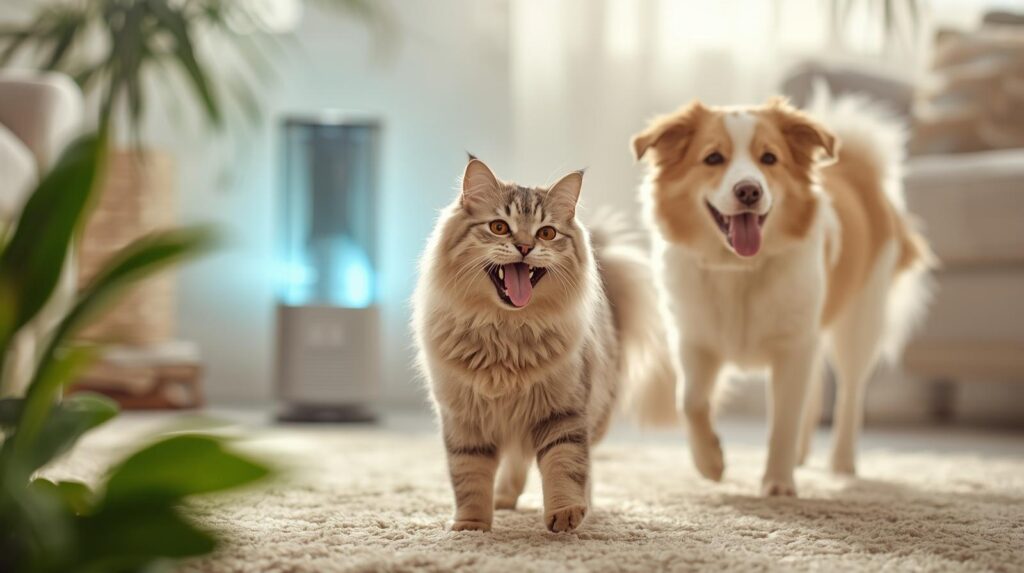
If you live with pets, you know the challenges: hair everywhere, lingering odors, and airborne allergens that trigger sneezing, congestion, or even asthma. Many pet owners ask: can air purifiers help with pets? The answer is yes — but effectiveness depends on the right type of purifier and proper usage.
This guide explains how air purifiers for pets work and what features make the biggest difference.
Why Pet Hair and Dander Affect Indoor Air Quality
Pets naturally shed hair and skin flakes, known as dander. Dander contains proteins that can trigger allergic reactions in sensitive individuals. Unlike hair, dander is microscopic and easily becomes airborne, circulating throughout your home.
Pet allergens are also present in saliva, urine, and fur. When dried and dispersed in the air, these tiny particles can aggravate allergies and asthma.
How Air Purifiers Capture Pet Allergens
Air purifiers reduce airborne pet particles through several filtration layers:
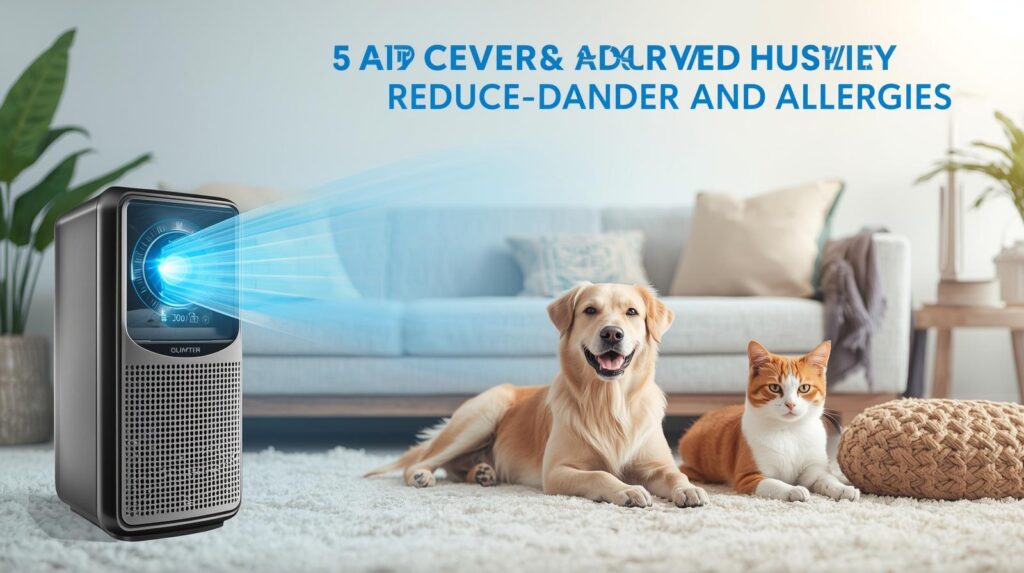
HEPA Filtration for Fine Particles
True HEPA filters capture up to 99.97% of particles as small as 0.3 microns, including pet dander, pollen, and fine dust. For allergy relief, a True HEPA filter is the most effective choice.
Pre-Filters for Hair and Large Debris
Pre-filters catch larger particles such as pet hair and fur before they reach the main filter. This protects the HEPA filter and extends its lifespan.
Carbon Filters for Odor
Activated carbon filters absorb odors and VOCs, reducing pet smells and keeping indoor air fresher. They also help neutralize odors from cleaning products or litter boxes.
Tips for Pet Owners Using Air Purifiers
- Proper placement: Place purifiers near pet sleeping or activity areas for maximum effect.
- Match CADR to room size: Ensure the purifier can handle the room where your pet spends most of its time.
- Continuous operation: Run the purifier regularly, especially during shedding season or high-allergen periods.
- Regular filter replacement: Replace HEPA and carbon filters as recommended to maintain efficiency.
Common Misconceptions
- Do air purifiers remove hair on furniture? No. They only filter airborne particles. Regular vacuuming is still needed.
- Do purifiers replace cleaning? No. They complement cleaning but do not eliminate the need for dusting or grooming.
- Do all purifiers handle pet allergens equally? No. Models with True HEPA and carbon filters work best.
Benefits Beyond Allergies
Using an air purifier for pets also improves general indoor air quality:
- Reduces dust, smoke, and pollen
- Helps people with asthma or respiratory issues breathe easier
- Minimizes lingering odors from pets and cleaning products
Final Thoughts
Air purifiers can make pet ownership more comfortable and healthier. To get the best results, choose a model with True HEPA and activated carbon filters, match it to your room size, and place it strategically near pet areas.
While they won’t replace grooming or cleaning, air purifiers significantly reduce airborne allergens, giving you and your family cleaner, fresher air at home.