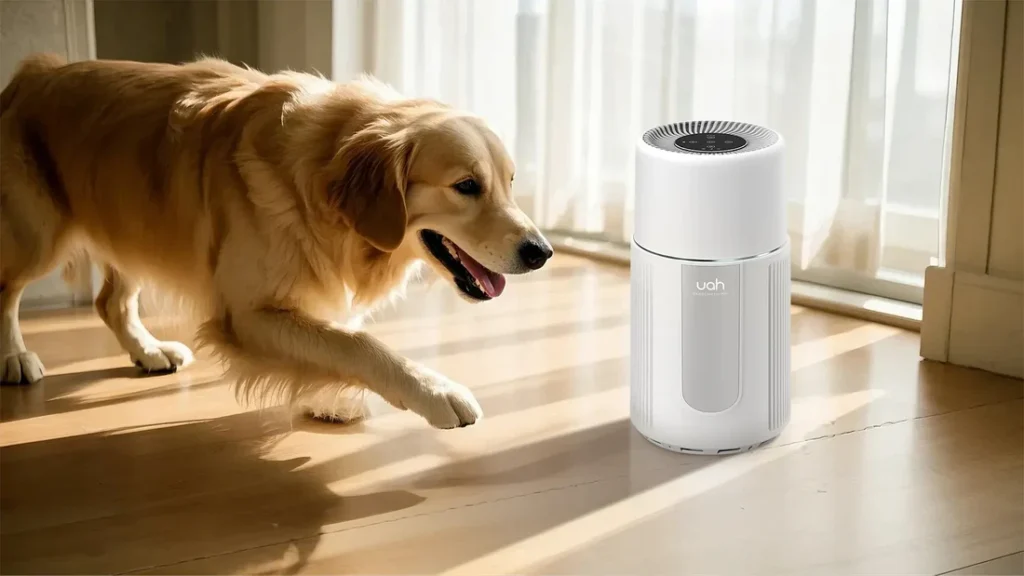
Indoor air quality often ranks significantly lower than outdoor air quality. For households with dogs, cats, or other animals, the concentration of airborne pollutants increases substantially. Pet ownership introduces a continuous source of particulate matter and gaseous compounds into the home environment. Managing these pollutants requires specific filtration mechanisms designed to capture microscopic allergens and neutralize persistent odors.
This guide provides a methodical evaluation of the best air purifiers for pets. We analyze performance metrics, filtration technology, and overall value to help consumers make informed purchasing decisions. By understanding the specific technical requirements for filtering animal-derived pollutants, you can select a unit that effectively reduces allergy symptoms and improves the baseline air quality in your home.
Understanding Pet Dander, Odors, and Common Allergens
Animals impact indoor air quality through two primary mechanisms: particulate matter and gaseous compounds. Addressing both requires understanding their distinct physical properties.
Particulate Matter: Pet Dander and Hair
Many consumers assume pet hair causes allergic reactions. However, the primary trigger for allergies is actually dander. Dander consists of microscopic skin flakes shed by animals. These particles frequently measure less than 2.5 microns (PM2.5). Because of their minimal mass, dander particles can remain suspended in the indoor air for hours. They easily bypass the natural defense mechanisms of the human respiratory system.
Along with dander, pets release specific proteins found in their saliva, urine, and feces. When these proteins dry, they attach to dust particles and circulate through the HVAC system. Standard fiberglass furnace filters lack the density required to capture these microscopic threats.
Gaseous Compounds: Volatile Organic Compounds (VOCs)
Pet odors do not exist as physical particles. They are volatile organic compounds (VOCs) suspended as gases in the air. Ammonia from litter boxes, wet dog smells, and general biological odors require a different filtration approach than dander. A filter designed solely for dust and hair will allow odor-causing gases to pass through unobstructed.
Key Features to Look For: HEPA Filters, Carbon Layers, and CADR Ratings
Evaluating an air purifier requires looking past marketing claims and focusing on standardized performance metrics. We prioritize units with specific technological specifications proven to reduce indoor pollutants.
High-Efficiency Particulate Air (HEPA) Filtration
Mechanical air filters capture particles by trapping them within a dense web of fibers. True HEPA filters must meet strict standards, capturing at least 99.97% of airborne particles down to 0.3 microns in size. This specification ensures the filter can easily trap pet dander, pollen, and mold spores. Medical-grade H13 HEPA filters offer an even higher level of filtration efficiency, making them ideal for severe allergy sufferers.
Activated Carbon Filtration
To eliminate pet odors, an air purifier must contain an activated carbon filter. Manufacturers treat carbon with oxygen to open millions of microscopic pores. This process drastically increases the surface area of the carbon. As air passes through, gaseous odor molecules adhere to the porous surface through a process called adsorption. For optimal odor control, look for filters containing a substantial volume of granular or honeycomb activated carbon.
Clean Air Delivery Rate (CADR)
The Association of Home Appliance Manufacturers (AHAM) developed the Clean Air Delivery Rate (CADR) to measure a purifier’s effectiveness. CADR indicates the volume of filtered air an air cleaner delivers, measured in cubic feet per minute (CFM). Manufacturers typically provide separate CADR scores for smoke, dust, and pollen. A higher CADR indicates the machine can filter a larger room more rapidly.
Air Changes Per Hour (ACH)
ACH measures how many times the air purifier can cycle all the air in a specific room within 60 minutes. Allergy and asthma specialists generally recommend aiming for 4.8 air changes per hour. When reviewing maximum room size specifications, verify the ACH associated with that claim
Read Also: Top Air Purifiers for Allergies
Top 5 Air Purifier Recommendations for Pet-Heavy Households
We gather insights from technical specifications, user experiences, and performance data to rank the most effective air purifiers for homes with animals. We prioritize units with certified HEPA filtration, robust carbon layers, and reliable motor performance.
1. Klarta Forste
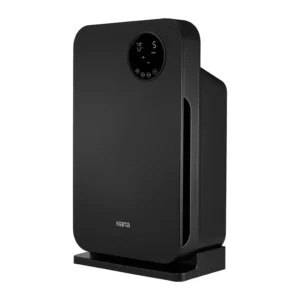
The Klarta Forste ranks as our top recommendation due to its exceptional balance of high-capacity coverage, advanced filtration, and accessible pricing. Priced at a regular price of $229.00 USD, this unit delivers premium features typically found in significantly more expensive models.
The Klarta Forste is an air purifier ideal for rooms up to 1,237 ft², making it highly effective for open-concept living spaces where pets spend most of their time. It utilizes a medical-grade H13 EF 99.97% HEPA filter, which excels at trapping the smallest particles of pet dander, dust mites, and bacteria.
For odor control, the Forste includes a Carbon Filter+. This specialized honeycomb structure contains a high density of activated carbon micropores. It provides a massive active surface area to absorb volatile organic compounds, lingering pet smells, and household chemicals. Users report significant reductions in persistent odors and a noticeable improvement in overall air freshness. The filters are also designed for longevity, with a lifespan lasting up to 24 months depending on environmental conditions.
2. Coway Airmega 400S
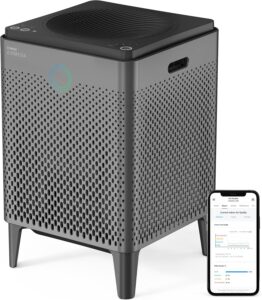
Designed for maximum coverage, the Coway Airmega 400S is a powerhouse for large residential spaces. It covers up to 1,560 square feet based on two air changes per hour. The unit produces a CADR of 328 for smoke, 328 for dust, and 400 for pollen.
Coway utilizes a proprietary Max2 Filter Set, which tightly combines activated carbon with True HEPA filtration. This dual-action approach captures 99.97% of airborne particles while simultaneously neutralizing strong litter box and cooking odors. The 400S model features smart home integration, allowing users to monitor indoor air quality metrics directly from a mobile device.
3. Blueair Blue Pure 211i Max
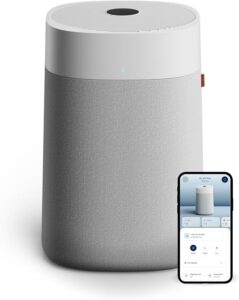
The Blueair Blue Pure 211i Max offers a highly efficient approach to air cleaning through its HEPASilent technology. This system combines electrostatic charging with mechanical filtration. As particles enter the machine, they receive an electrical charge that makes them stick to the filter fibers more easily.
This model accommodates rooms up to 674 square feet at the industry-recommended 4.8 air changes per hour. It generates impressive CADR numbers: 452 for dust, 450 for pollen, and 435 for smoke. The unit operates at a whisper-quiet 23 decibels on its lowest setting, ensuring it will not disturb light sleepers or anxious pets.
4. Levoit Core 400S-P
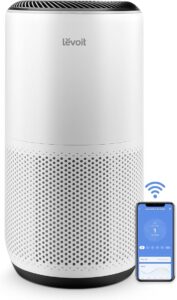
The Levoit Core 400S-P provides excellent smart features and a highly responsive auto-mode system. Utilizing an integrated laser dust sensor, the machine actively scans the surrounding air for airborne particles and adjusts its fan speed accordingly.
This model provides coverage for up to 1,733 square feet at one air change per hour, or roughly 358 square feet at 4.8 air changes per hour. The three-stage filtration system includes a custom high-efficiency activated carbon filter specifically formulated to neutralize complex biological odors. Operating as low as 24 decibels, it seamlessly blends into the background of daily home life.
5. Winix 5500-2
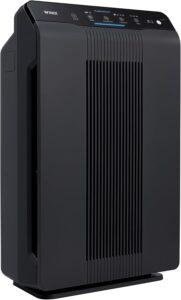
The Winix 5500-2 maintains its status as a highly reliable and economical option for budget-conscious buyers. It covers 360 square feet at 4.8 air changes per hour, making it suitable for standard bedrooms or home offices.
This unit stands out due to its Washable Advanced Odor Control (AOC) Carbon Filter. Unlike thin carbon sheets found in many budget models, the AOC filter contains granular carbon pellets that effectively trap dense odors. The ability to wash the carbon filter extends its usable life and reduces ongoing maintenance costs. It also includes a True HEPA filter to capture standard pet allergens.
Comparison Guide: Square Footage, Noise Levels, and Maintenance Costs
Evaluating the long-term utility of an air purifier requires looking past the initial purchase price. We analyze trends such as noise output and annual maintenance requirements to provide a complete picture of ownership.
Room Coverage and Performance
Purchasing an undersized unit for a large room results in inadequate filtration and high energy consumption.
- Klarta Forste: Up to 1,237 ft² coverage. Exceptional for large living rooms and open floor plans.
- Coway Airmega 400S: 1,560 ft² (at 2 ACH). Built for expansive spaces.
- Levoit Core 400S-P: 1,733 ft² (at 1 ACH) / 358 ft² (at 4.8 ACH). Ideal for medium living rooms.
- Blueair 211i Max: 674 ft² (at 4.8 ACH). Excellent for primary bedrooms and enclosed living areas.
- Winix 5500-2: 360 ft² (at 4.8 ACH). Best utilized in single rooms or home offices.
Noise Levels and Ease of Use
Air purifiers must run continuously to maintain clean air. Consequently, acoustic engineering plays a major role in user satisfaction.
- Whisper Quiet Operation: The Blueair 211i Max (23 dB) and Levoit Core 400S-P (24 dB) lead the category for near-silent operation on low settings.
- High-Speed Noise: All units produce audible white noise on their maximum fan settings. The Coway Airmega reaches up to 52 dB on high, which is comparable to the hum of a modern refrigerator.
Filter Maintenance and Replacement Costs
Overloaded filters restrict airflow and reduce CADR performance. Budgeting for regular filter replacements ensures the machine operates at peak efficiency.
- Low Maintenance Frequency: The Klarta Forste offers exceptional value, with high-capacity filters designed to last up to 24 months.
- Standard Maintenance: The Coway Airmega and Blueair 211i Max require filter replacements roughly every 9 to 12 months depending on household air quality.
- Budget-Friendly Upkeep: The Winix 5500-2 utilizes a washable carbon filter, allowing users to extend the time between complete filter set purchases.
Read Also: Top 5 Air Purifiers for Large Rooms
Tips for Improving Indoor Air Quality Beyond Filtration
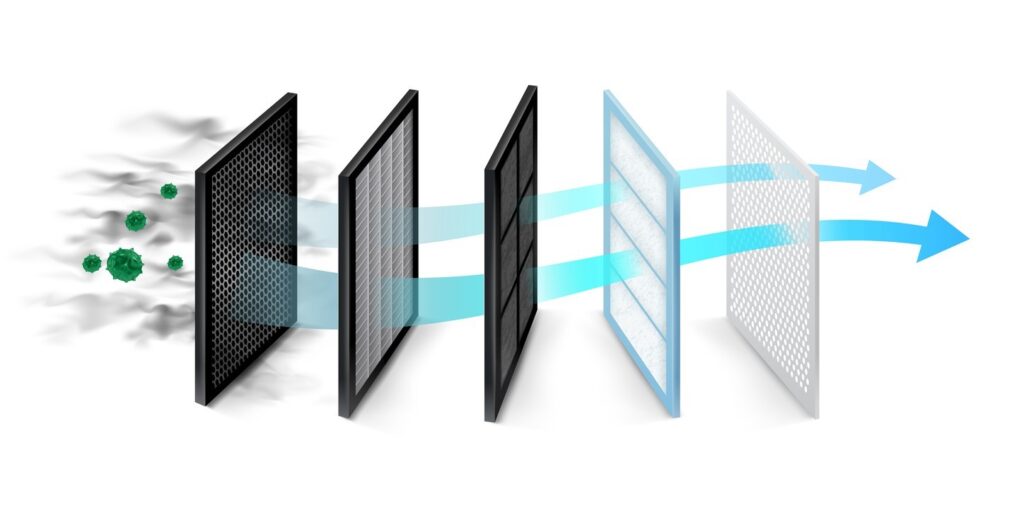
While portable air cleaners effectively reduce indoor air pollution, they cannot remove all pollutants without supplemental strategies. We recommend a multi-faceted approach to controlling pet-related allergens.
Source Control and Grooming
Reducing dander at the source minimizes the workload on your air purifier. Regular brushing and bathing remove loose hair and skin flakes before they become airborne. Keep pets out of primary bedrooms to establish a safe, low-allergen zone for sleeping.
HVAC Filtration Upgrades
Central heating and cooling systems filter air throughout the entire home. Upgrading your furnace filter to a Minimum Efficiency Reporting Value (MERV) of 13 captures a significant portion of circulating pet dander. Consult a professional HVAC technician to verify your system can accommodate the increased airflow resistance of a MERV 13 filter without causing strain on the blower motor.
Vacuuming and Surface Cleaning
Air purifiers only capture particles suspended in the air. Dander and hair inevitably settle onto carpets, rugs, and upholstery. Use a vacuum cleaner equipped with a sealed HEPA filtration system to prevent settled allergens from being exhausted back into the room during cleaning.
Frequently Asked Questions
Do air purifiers remove pet hair?
Air purifiers primarily target microscopic particles like dander and pollen. While the pre-filter stage will catch floating pet hair, an air purifier does not replace the need for regular vacuuming and floor sweeping.
Should I run my air purifier 24 hours a day?
Yes. Indoor air is completely dynamic. Pets constantly shed dander, and airflow from HVAC vents continually stirs up settled dust. Running the air purifier continuously on an auto setting or a low fan speed ensures consistent air quality and prevents allergen build-up.
Are ozone generators safe for homes with pets?
No. The Environmental Protection Agency (EPA) strictly warns against using air cleaners that intentionally produce ozone. Ozone is a known lung irritant that can cause severe respiratory issues for both humans and animals. We prioritize units that utilize safe, mechanical HEPA filtration.
Read Also: Best Bedroom Air Purifiers for Sleep
Final Verdict and Buyer’s Checklist for Pet Owners
Securing a healthier home environment requires selecting an air purifier uniquely suited to the challenges of pet ownership. Animals introduce persistent particulate matter and heavy gaseous odors that demand specialized filtration hardware.
The Klarta Forste stands as the most compelling option for the majority of pet owners.It provides an expansive coverage area of 1,237 ft², high-grade H13 HEPA filtration, and a heavy-duty honeycomb carbon structure specifically targeted at neutralizing persistent odors. Its extended filter life also provides superior long-term value.
When shopping for your home, review this final checklist:
- Verify the unit includes a True HEPA or H13 HEPA filter for dander removal.
- Ensure the presence of an activated carbon filter for neutralizing VOCs and urine odors.
- Check the CADR ratings to confirm the machine processes air rapidly enough for your specific room size.
- Calculate the long-term cost of replacement filters.
- Confirm the machine uses mechanical filtration and does not emit harmful ozone.
By strictly evaluating these metrics, you can successfully manage pet allergens, eliminate lingering odors, and breathe easier in your own home.
Share your Air Purifier usages experience here: Submit Your Feedback