Indoor air quality directly impacts respiratory health, sleep quality, and overall physical comfort. Airborne dust is a complex mixture of organic and inorganic matter, including skin cells, plant pollen, pet dander, textile fibers, and microscopic dust mites. When these particulate matters accumulate, they often trigger allergic reactions and exacerbate asthma symptoms for occupants.
Evaluating air purifiers requires looking beyond marketing claims to analyze standardized performance metrics. In 2026, the regulatory standards set by organizations like the Association of Home Appliance Manufacturers (AHAM) and the U.S. Environmental Protection Agency (EPA) provide a clear framework for measuring a device’s effectiveness. These standards allow consumers to compare devices based on objective data rather than subjective impressions.
This guide provides a comprehensive analysis of the mechanical components that remove dust from indoor environments. By understanding technical specifications like the Clean Air Delivery Rate (CADR), filtration efficiency, and optimal room sizing, consumers can make data-driven purchasing decisions.
We will examine the top devices currently available on the market, analyze their performance metrics, and provide a structured framework for selecting the right model for heavy dust environments.
How air purifiers eliminate dust: HEPA filtration vs. ionizers
Air purifiers rely on specific technologies to capture and neutralize airborne particles. The two most prominent methods for handling indoor dust are mechanical HEPA filtration and electronic ionizers. Understanding the differences between these technologies is crucial for maintaining a safe and allergen-free environment.
Mechanical HEPA filtration
High-Efficiency Particulate Air (HEPA) filters represent the industry standard for safe, mechanical dust removal. A certified True HEPA or H13 filter forces air through a dense web of fiberglass or synthetic fibers. This physical barrier captures 99.97% of airborne particles as small as 0.3 microns.
Mechanical filtration captures dust without releasing any secondary byproducts into the air. Because dust particles typically range from 0.5 to 100 microns in size, H13 HEPA filters easily trap these allergens on the first pass. We prioritize units equipped with verifiable H13 or True HEPA filters over models using unregulated terms like “HEPA-type” or “HEPA-like.”
Electronic ionizers and ozone risks
Ionizers operate by emitting negatively charged ions into the air. These ions attach to positively charged dust particles, making them heavy enough to fall out of the air and settle onto surfaces like floors and furniture. While this clears the air, it requires you to manually vacuum or sweep the settled dust.
More importantly, the California Air Resources Board (CARB) and the EPA have issued consistent warnings regarding electronic air cleaners. Many ionizers produce ozone as a byproduct. Ozone is a known lung irritant that can worsen asthma and damage respiratory tissue. For a health-conscious household, strictly mechanical HEPA filtration provides a safer, more effective method for continuous dust removal.
Read Also: Best Air Purifiers for Pets
Key features to look for: CADR ratings, filter types, and room size coverage
Selecting an efficient air purifier requires matching the device’s technical specifications to the physical dimensions of your living space.
Clean Air Delivery Rate (CADR)
The Clean Air Delivery Rate (CADR) measures the volume of clean air a purifier delivers per minute, expressed in cubic feet per minute (CFM). AHAM tests air purifiers independently and assigns separate CADR numbers for three specific pollutants: tobacco smoke, dust, and pollen.
When targeting dust accumulation, examine the dedicated dust CADR. A higher CADR indicates that the device filters the room’s air more frequently. As a standardized baseline, AHAM recommends following the “two-thirds rule.” The CADR of your air cleaner should equal at least two-thirds of the room’s area in square feet, assuming an eight-foot ceiling.
Air Changes per Hour (ACH)
ACH defines how many times the purifier filters the entire volume of air in a specific room within one hour. For households managing high dust levels, allergies, or asthma, the EPA and AHAM recommend units capable of achieving 4.8 ACH. This means the device will clean the room’s air nearly five times per hour, significantly reducing the concentration of settling dust.
Multi-stage filter types
The most efficient models use a multi-stage approach to capture different types of pollutants:
- Pre-filters: A washable or vacuumable outer screen captures large particles like pet hair and prominent dust bunnies, extending the life of the internal filters.
- H13 HEPA filters: The core mechanical component designed to trap microscopic dust mites, pollen, and fine particulate matter (PM2.5).
- Activated carbon filters: A cellular filter treated with activated carbon. While not primarily for dust, this layer absorbs volatile organic compounds (VOCs), cooking odors, and smoke.
Read Also: Top Air Purifiers for Allergies
Top 5 air purifier recommendations for heavy dust environments
We gather insights from current product specifications, CADR test results, and verified room sizing metrics to evaluate the top air purifiers in 2026. The following models demonstrate high efficiency in removing heavy dust.
1. Klarta Forste
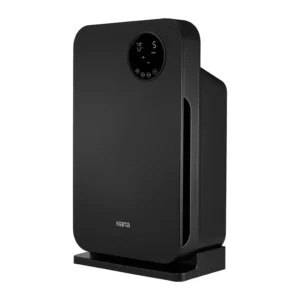
The Klarta Forste leads our list by offering exceptional coverage and specialized filtration technology at a highly competitive price point. Priced at $229.00 USD, it delivers robust air cleaning capabilities for expansive open-concept living spaces.
- Coverage Area: Ideal for rooms up to 1,237 ft²
- Filtration System: Uses an advanced H13 EF 99.97% filter combined with a Carbon Filter+ system.
- Dust Performance: The H13 EF filter provides a larger surface area than standard filters, efficiently absorbing coarse dust, PM1, PM2.5, PM10 particles, and dust mites.
- Added Value: The honeycomb activated carbon filter eliminates VOCs and odors simultaneously. The high square-footage coverage ensures reliable ACH rates even in large basements or living rooms.
2. Blueair Pure 211i Max
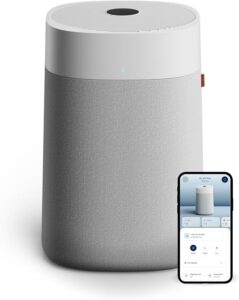
The Blueair Pure 211i Max is engineered for large, heavily trafficked rooms requiring consistent dust extraction. It features smart home integration to monitor air quality in real time.
- Coverage Area: 635 sq. ft. (calculated at 4.8 ACH)
- CADR (Dust): 410 CFM
- Noise Level: 23 to 53 dB
- Dust Performance: With a verified dust CADR of 410, it quickly captures heavy dust loads and is AHAM Verifide.
3. Windmill Air Purifier
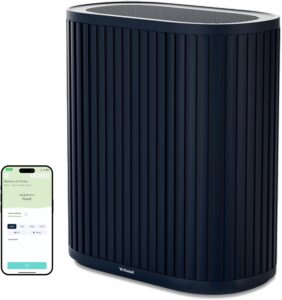
The Windmill Air Purifier balances aesthetic design with strong technical performance. It utilizes smart integration, allowing users to control the fan speeds directly from mobile devices.
- Coverage Area: 442 sq. ft. (calculated at 4.8 ACH)
- CADR (Dust): 284 CFM
- Noise Level: 16 to 54 dB
- Dust Performance: The unit operates quietly while maintaining a dust CADR of 284, making it highly suitable for mid-sized primary bedrooms.
4. Coway Airmega AP-1512HH Mighty
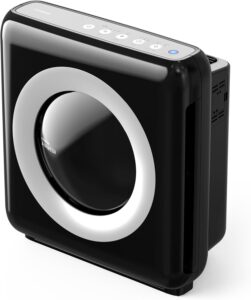
A consistently well-performing unit, the Coway Airmega Mighty is a compact mechanical purifier that uses standard HEPA technology to manage routine dust accumulation efficiently.
- Coverage Area: 361 sq. ft. (calculated at 4.8 ACH)
- CADR (Dust): 248 CFM
- Noise Level: 24 to 53 dB
- Dust Performance: It utilizes a multi-stage filtration system to capture pet dander and fine dust, ideal for secondary bedrooms or home offices.
5. Levoit Core 300
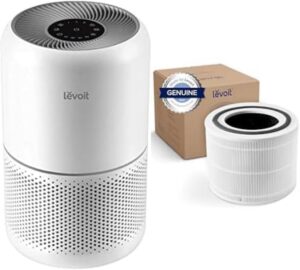
For smaller rooms, the Levoit Core 300 provides highly efficient, localized dust control. Its compact cylindrical design allows for 360-degree air intake.
- Coverage Area: 222 sq. ft. (calculated at 4.8 ACH)
- CADR (Dust): 153 CFM
- Noise Level: 24 to 54.5 dB
- Dust Performance: AHAM Verifide with a 153 dust CADR, this unit targets desktop dust and airborne particles in nurseries or small studies.
Detailed buyers guide on maintenance and filter replacement cycles
An air purifier is only as effective as its internal filters. A dirty, overloaded filter restricts airflow, which directly decreases the CADR and lowers the room’s ACH. Maintaining an allergen-free environment requires a strict adherence to maintenance schedules.
Pre-filter maintenance
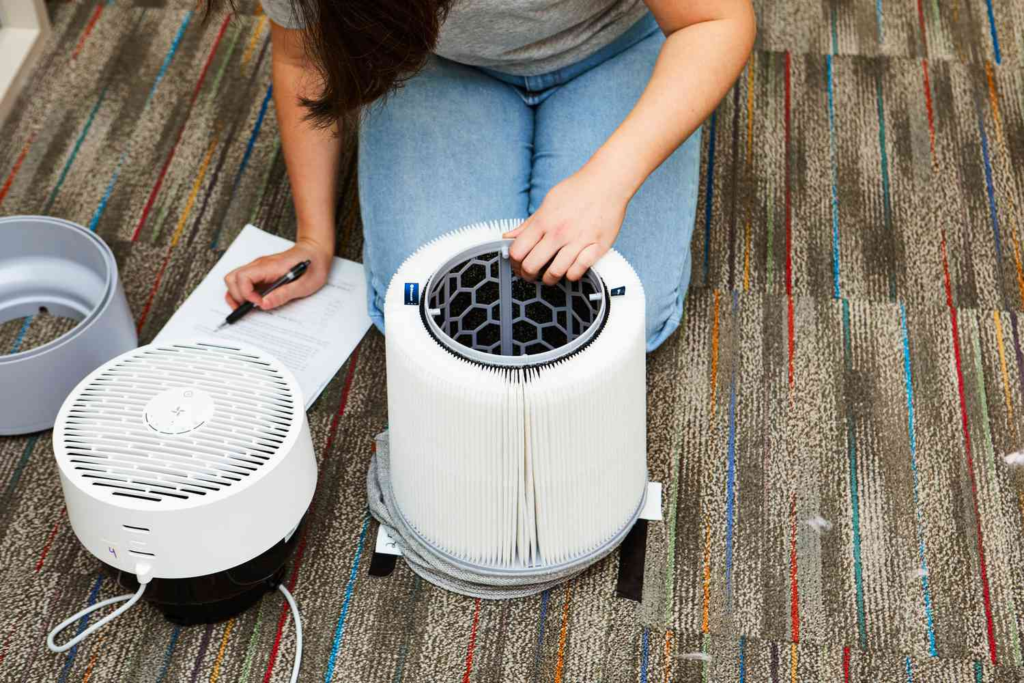
Pre-filters trap large dust clusters and hair. You should inspect the pre-filter every two to four weeks. Most pre-filters are either washable under a sink or easily cleaned using a vacuum cleaner’s brush attachment. Keeping the pre-filter clear reduces strain on the internal motor and prevents the primary HEPA filter from clogging prematurely.
HEPA and carbon filter replacement
Unlike pre-filters, True HEPA and activated carbon filters cannot be washed. Water damages the dense fiberglass mesh and ruins the carbon’s porosity.
- Replacement interval: Standard H13 HEPA and carbon filters require replacement every 6 to 12 months.
- Usage variables: Homes with pets, active renovations, or proximity to wildfire smoke will need replacement closer to the 6-month mark.
- Filter indicator lights: Many modern units feature filter replacement indicators based on run-time algorithms. However, routinely checking the physical color of the filter (which turns dark gray or black when saturated with dust) provides the most accurate indicator of exhaustion.
Always verify the long-term availability and cost of genuine replacement filters before purchasing the base unit. Using third-party, non-certified filters often voids manufacturer warranties and can degrade the device’s verified CADR performance.
Read Also: Top Air Purifiers for Smoke
Video guide On How to Change Your HEPA Air Filter
Video Collected from Youtube: Climate Smart Missoula
Comparative analysis of noise levels and energy consumption
Air purifiers must run continuously to maintain a high indoor air quality index. Because they operate for 24 hours a day, acoustic comfort and electrical efficiency are primary technical considerations.
Evaluating noise levels (Decibels)
Noise is measured in A-weighted decibels (dB or dBA). To put this metric into perspective, 20 dB is comparable to rustling leaves, while 50 to 55 dB is equivalent to the hum of a modern refrigerator or moderate rainfall.
For continuous operation, we prioritize devices that operate quietly.
- Sleep modes: Look for units that drop below 25 dB on their lowest settings. This ensures whisper-quiet operation suitable for bedrooms.
- Maximum speeds: Air purifiers work best at their highest fan speeds, but they can be loud. According to the American Lung Association, sustained operational noise above 55 dB can be unpleasant and disruptive for most households. Ensure the top speed of your chosen device stays at or below this threshold.
Monitoring energy consumption
Because continuous operation is necessary for optimal 4.8 ACH rates, energy consumption directly impacts household utility bills.
- Wattage: Standard air purifiers draw between 30 and 60 watts on high speed, comparable to a single traditional lightbulb.
- Energy Star certification: We recommend looking for the Energy Star Version 2.0 room air cleaners specification label. Devices with this certification utilize energy-efficient motors that deliver high CADR metrics while drawing minimal electricity, yielding measurable savings over the lifespan of the unit.
Read Also: Best Bedroom Air Purifiers for Sleep
Final checklist for first-time buyers
Navigating product specifications requires a systematic approach. Use this final checklist to ensure the device you choose aligns with your specific environmental needs:
- Calculate your room size: Measure your room’s square footage (length × width). Ensure the manufacturer’s suggested room size covers this area while maintaining a 4.8 ACH rate.
- Verify the CADR rating: Check that the dust CADR number equals at least two-thirds of your room’s square footage. Look for independent AHAM Verifide testing.
- Confirm H13 HEPA filtration: Ensure the device uses strict mechanical filtration capable of capturing 99.97% of 0.3-micron particles. Avoid ionizers and ozone-generating devices.
- Check noise metrics: Verify that the decibel range operates below 55 dB at maximum speed, and features a sleep mode below 25 dB for nighttime use.
- Assess maintenance costs: Factor in the price of genuine replacement filters and confirm they only need replacing every 6 to 12 months.